If you're considering a destination wedding, Charleston makes a case that's hard to beat. I've photographed weddings here across four seasons — in centuries-old ballrooms, on resort beaches, under moss-covered live oaks — and what keeps bringing couples back has less to do with any one venue than with the full picture the city creates.
Charleston Gives You Range Without Compromise
Most destination cities have a look. Napa is rolling hills and wine country. Hawaii is beach or volcano. The Florida Keys are waterfront, full stop. Charleston has a distinct identity, but the range of wedding settings within that identity is genuinely unusual.
Downtown, you have over 200 years of preserved architecture. Antebellum mansions with wide center halls and wraparound piazzas. Church windows tall enough to frame a ceremony. Grand staircases built for the kind of entrance a wedding dress was made for. The Historic District delivers a specific kind of grandeur that photographs like nothing else — all that age and craftsmanship giving your images a weight they simply don't get from a ballroom built in 2009.
Twenty minutes from downtown, the vibe shifts entirely. Kiawah Island and Seabrook Island give you private beach, resort services, and saltwater views that could be mistaken for the Caribbean. These are the weddings where guests arrive in flip flops for Friday cocktails and shift into formal attire on Saturday without ever leaving the property. The logistical simplicity — and the built-in vacation feel for guests — is hard to replicate anywhere else.
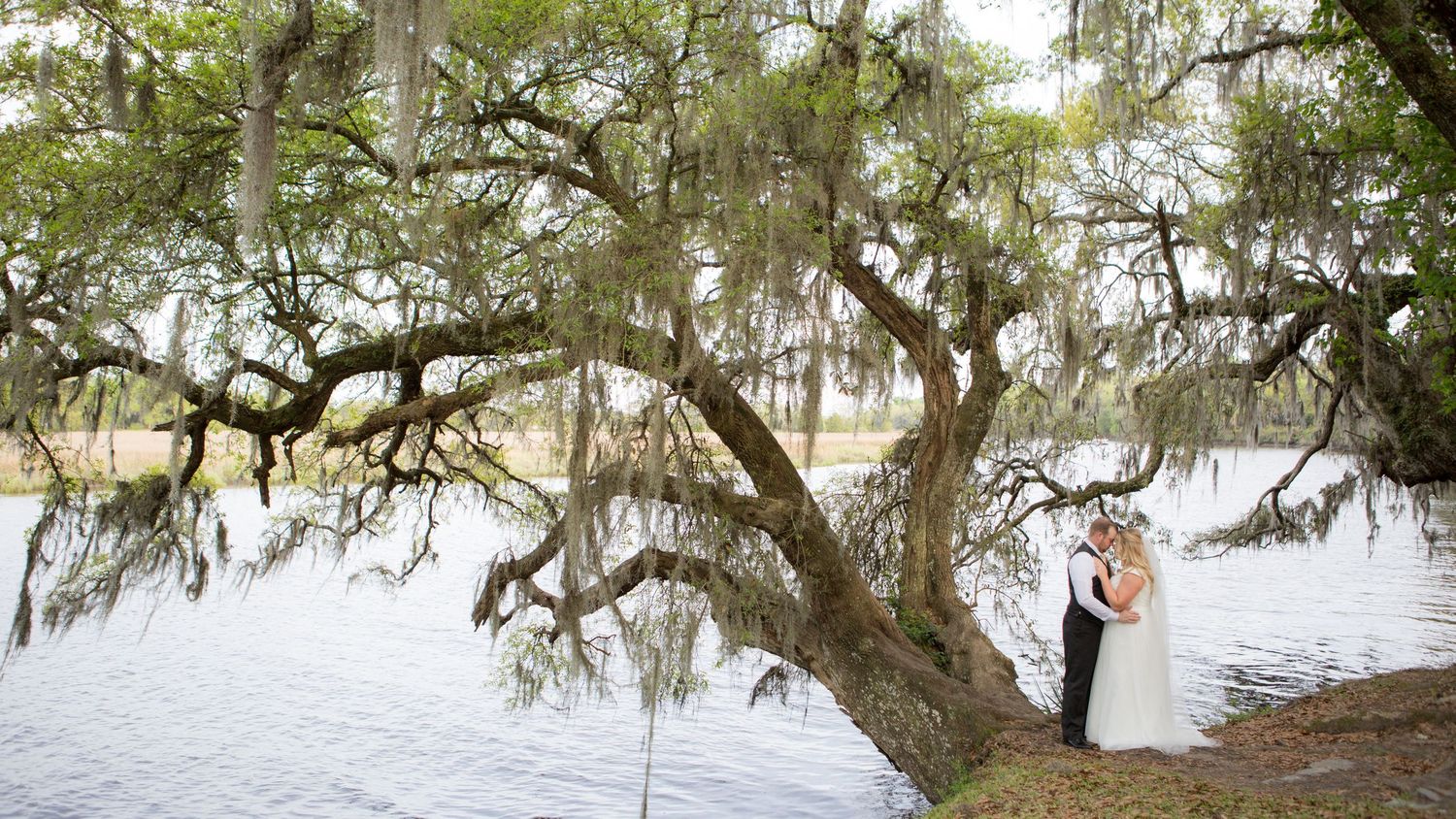
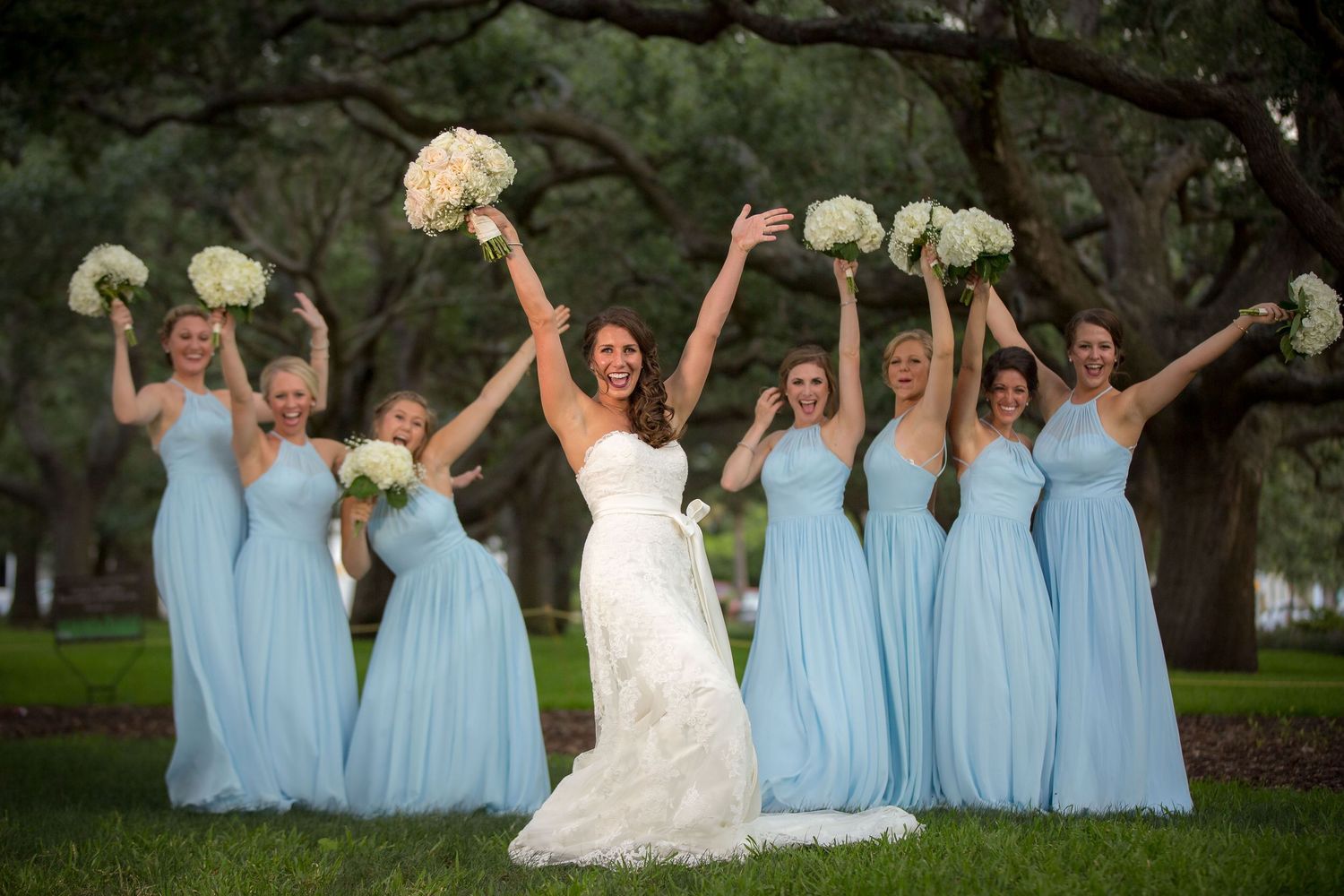
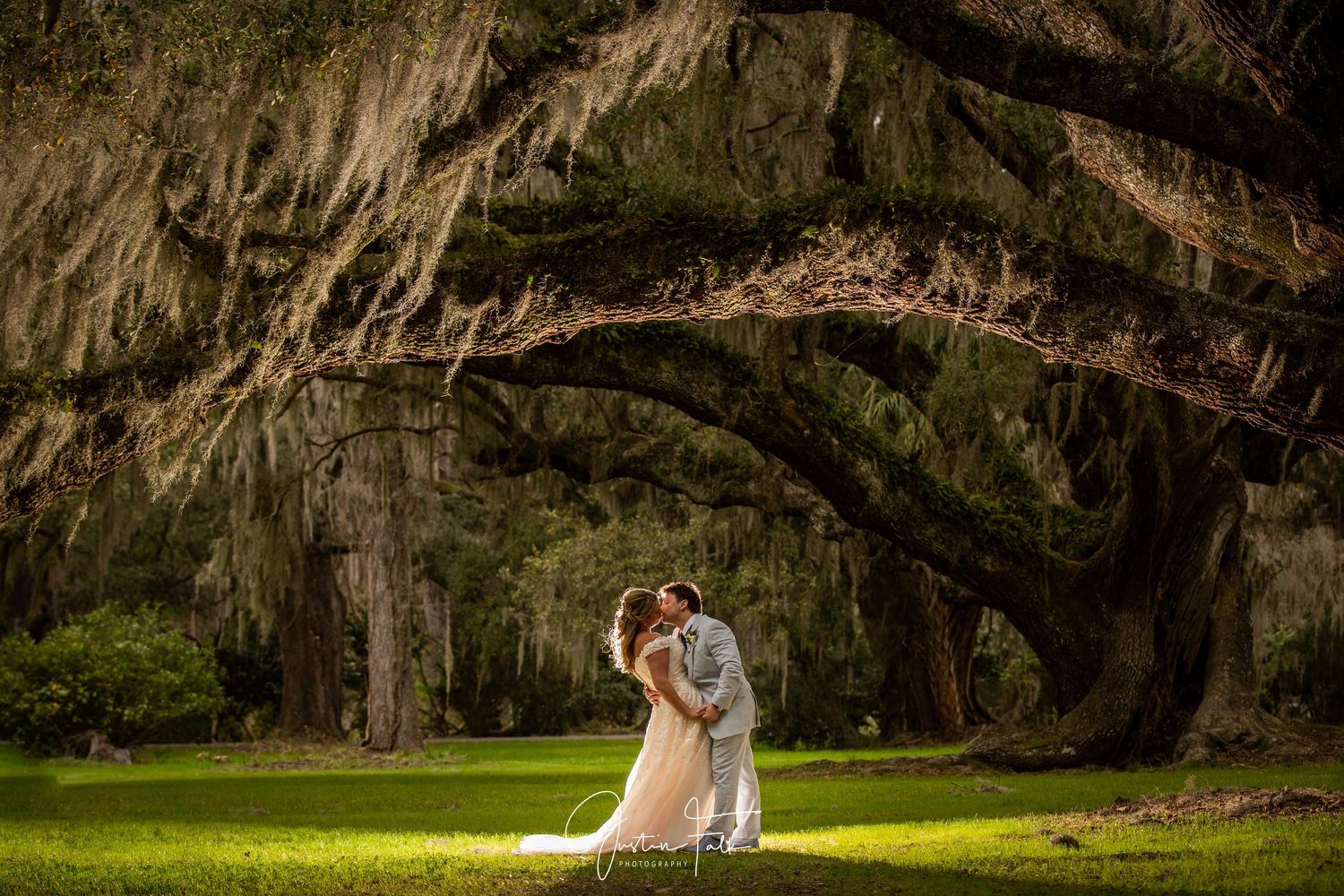
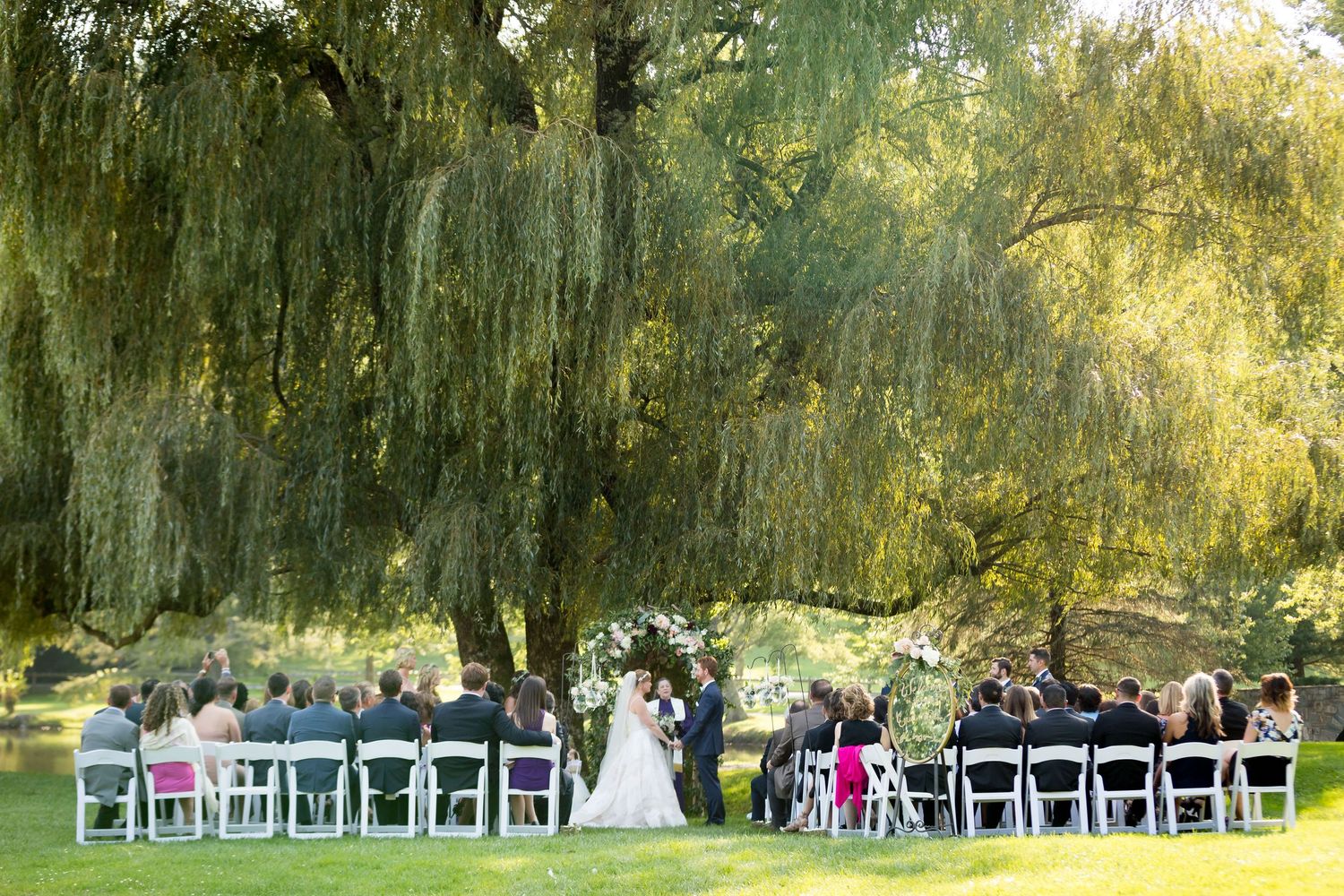
Then there's what's in between: the Lowcountry itself. Live oak canopies draped in Spanish moss that hang like natural chandeliers. Plantations along the Ashley and Cooper rivers where the land has been cultivated since the 1600s. Farm venues where exposed beams and string lights make a reception feel simultaneously rustic and refined. Garden properties in bloom April through October.
The variety means couples with very different aesthetics — the bride who wants ballroom grandeur, the couple who wants barefoot-on-the-sand, the pair who wants to step into living history — can all find what they're genuinely looking for. That's rare in a single destination.
Your Guests Will Actually Enjoy the Trip
Here's something destination wedding photographers don't say often enough: the guest experience matters for your photos.
Happy guests make warm images. Relaxed people laugh more easily, dance harder, and show up in the background moments that give an album life. When guests are stressed about travel or bored in a city that doesn't have much going on outside the wedding itself, that energy shows up in the work.
Charleston guests tend to arrive happy, and they tend to stay that way. The food alone would do it. Charleston's restaurant scene punches well above its size — James Beard Award-winning chefs, classic Lowcountry cuisine at spots that haven't changed in forty years, and enough range in price point that your cousin visiting from a small town and your friend who restaurant-hops in New York will both eat extremely well. Guests who eat well have a different energy.
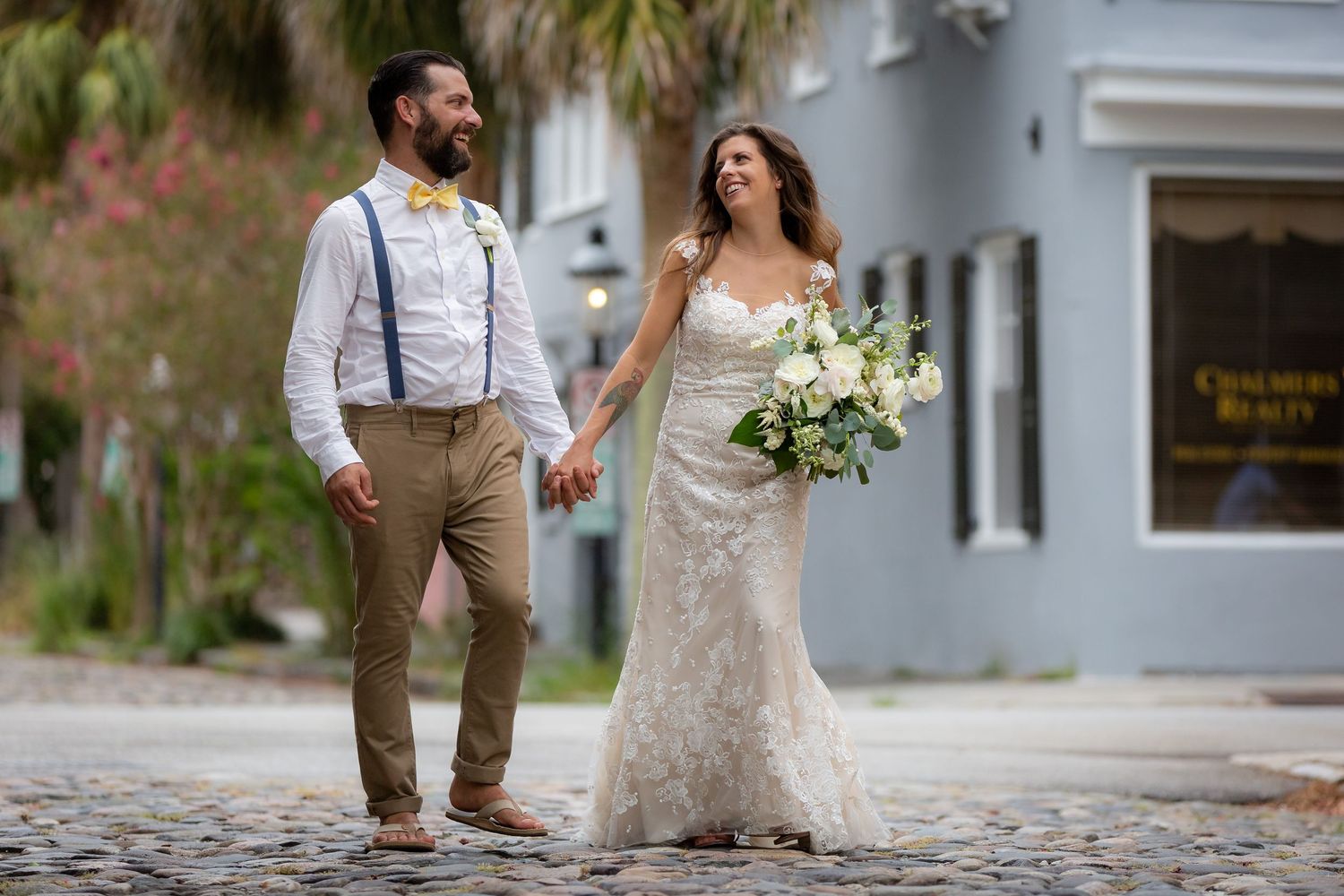
The city is also genuinely beautiful to walk through. Charleston's Historic District is compact and pedestrian-friendly in a way that most Southern cities aren't. Step outside your hotel and you're on a block of pastel-painted 18th-century homes in five minutes. The Battery, White Point Garden, Rainbow Row, the French Quarter — these aren't attractions requiring a car or a tour. They're just the city, and guests experience them casually, which makes the whole visit feel effortless.
For guests who want to extend the trip, the beaches are close. Folly Beach is 20 minutes. Sullivan's Island is 25. Day sails in the harbor, plantation tours, Lowcountry day trips — the infrastructure for a genuinely good long weekend is already there. You don't have to build it.
A Full Wedding Weekend, Not Just a Wedding Day
There's a meaningful difference between a destination wedding and a wedding you happen to have somewhere other than home.
A true destination wedding is an event with an arc that extends beyond a single evening ceremony and reception. There's a welcome dinner Thursday or Friday. A morning-after brunch. Activities built around the group being together in a place worth being. The wedding day itself sits inside a larger experience, and that larger experience is what people remember and talk about for years.
Charleston is built for this. The city has enough to offer that filling a long weekend for 50 to 100 guests doesn't require the couple to become full-time event planners. Art galleries, historic tours, boat charters, rooftop bars, cooking classes, brewery tours — the infrastructure is there, and it's good. Guests know what to do with their time here.
This takes real pressure off any individual event. Not every moment of the rehearsal dinner has to be perfect because the city itself is doing some of the experiential work. Guests are already having a good time before the ceremony starts.
For photographers, the full-weekend structure creates something better, too. More time with couples in different settings. Morning portraits at the Battery in golden light before the city wakes up. A welcome dinner venue that tells its own visual story. The album I build from a full Charleston destination weekend looks dimensionally different — and much fuller — than a same-day event.
Charleston's Wedding Market Is Mature — That Works in Your Favor
A lot of beautiful destination wedding locations have beautiful settings and underdeveloped vendor ecosystems. That's not a criticism — it's just logistics. When a location gets popular as a wedding destination ahead of the infrastructure catching up, couples end up sourcing vendors from multiple cities, managing more coordination, and accepting more uncertainty. Things an experienced local team handles on instinct have to be figured out from scratch every time.
Charleston doesn't have that problem.
This is a city with deep roots in the wedding industry. There are florists here who have been working with local botanicals for thirty years. Catering operations that have worked every major venue in the area so many times they know where the freight elevator is and which side of the property gets wind in October. Planners who have the direct number of every permits officer and the vendor relationships that translate directly into better service for their clients.
For destination couples specifically — people who can't be there in person for every venue walk-through, every tasting, every linen selection — the depth of the local vendor market is genuine protection. A good Charleston planner can run significant portions of logistics remotely because they've done it many times with vendors they fully trust.
From a photography standpoint, this means I'm not working alongside a team I've never met. I know the light at Lowndes Grove. I know which angles at Magnolia Plantation work in afternoon sun and which ones don't. I know how the ceremony aisle at Middleton Place reads at different times of year. Local knowledge makes the photography better, and in Charleston, that knowledge is deep and earned.
The City Has Lived-In Beauty
There's a difference between a beautiful place and a place that looks like it's been beautiful for a long time. Charleston is the latter.
The patina is real. The buildings aren't restored to look old — they are old, and they've been maintained with the kind of care that makes age feel considered rather than neglected. The ironwork on the front gates has rust in the joints from salt air and decades of humidity. The brick walls have mortar that's been patched and repatched over generations. The floors creak. The staircase banisters are worn smooth from two centuries of hands on them.
This matters photographically because age and texture read in images. A recently built "historic-style" venue gives you lines and proportions but not weight. When I photograph a couple against a building that has stood through the Civil War, multiple hurricanes, and two centuries of history — there is something in those images that simply cannot be replicated at a newer property.
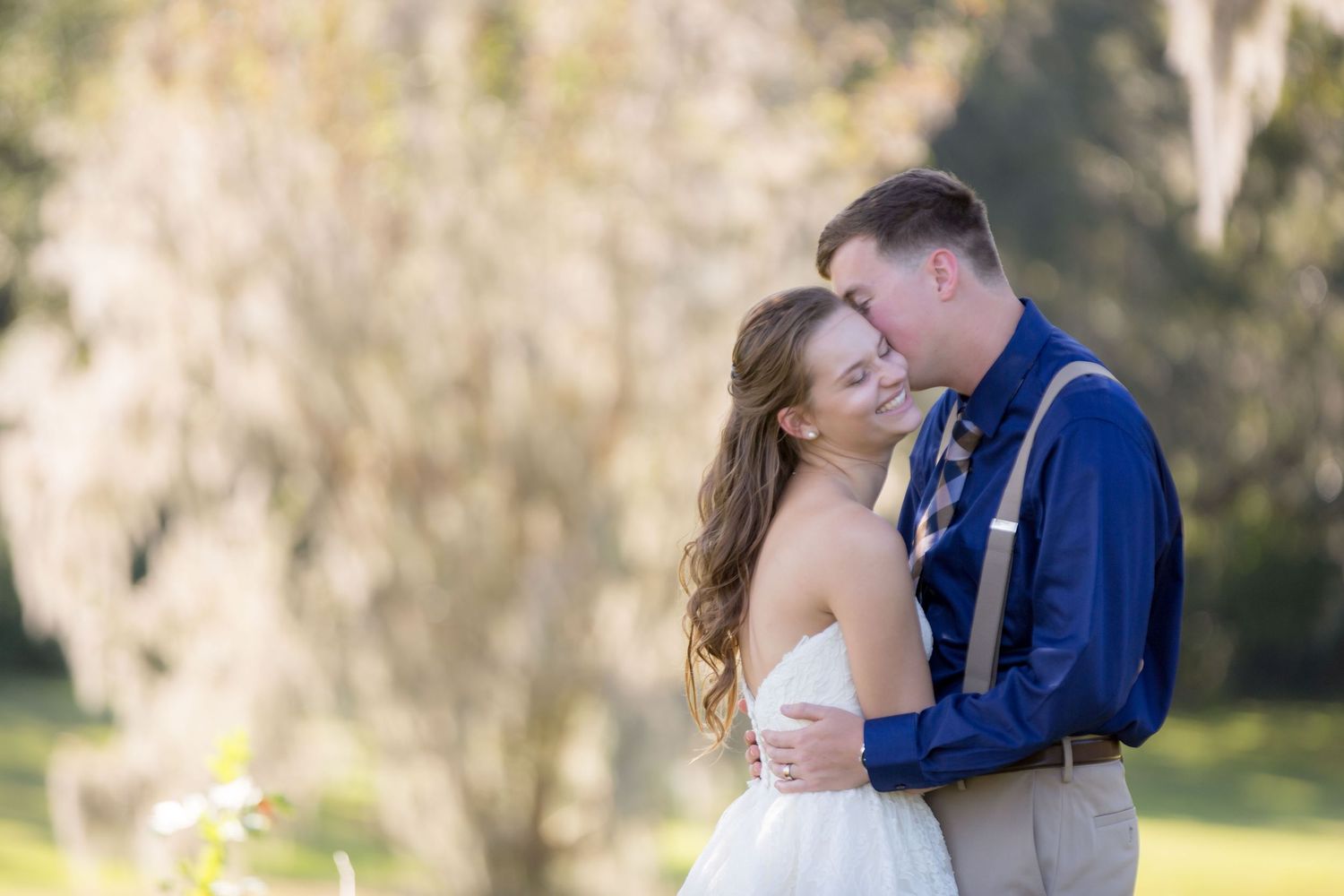
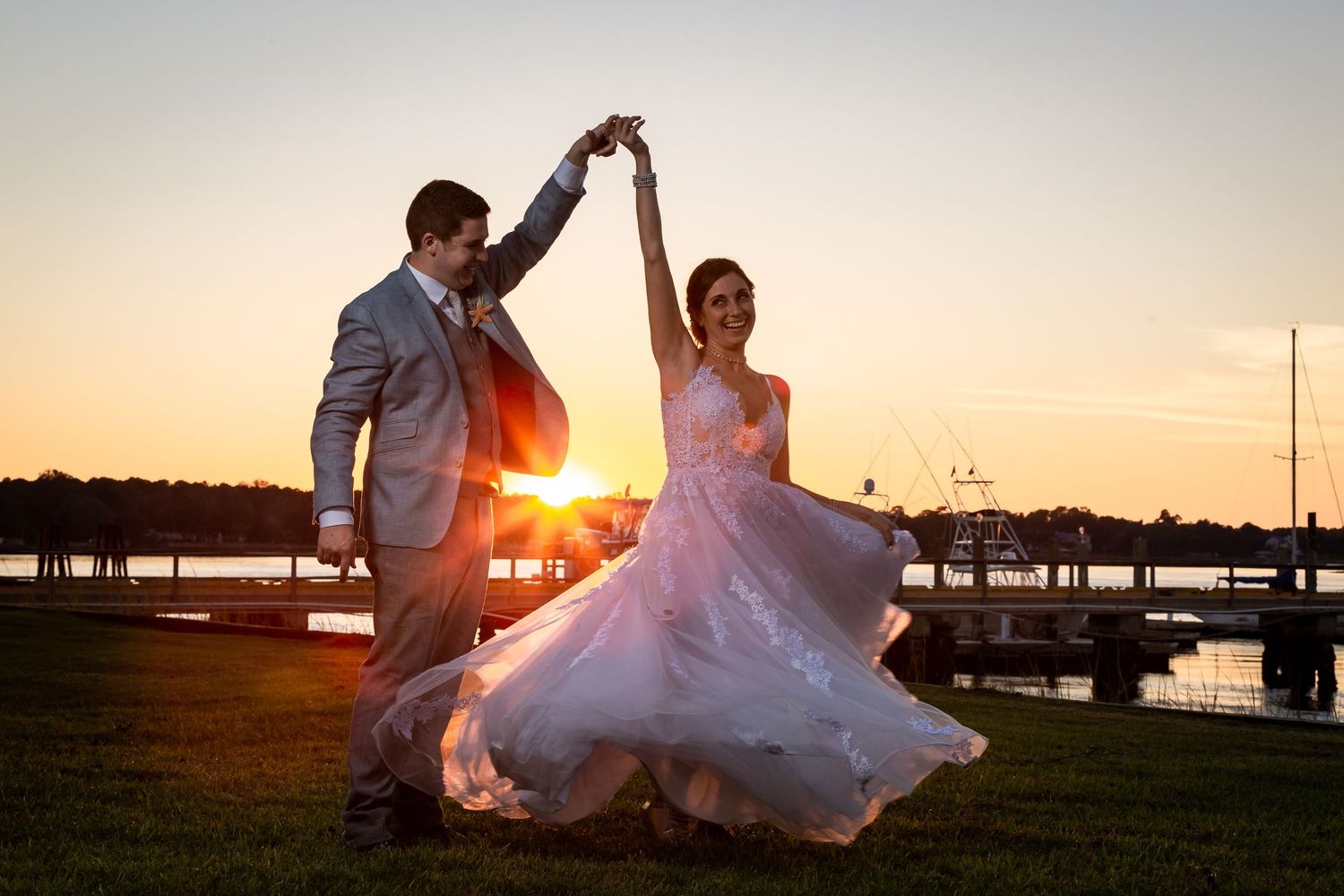
The Lowcountry landscape adds its own layer. Spanish moss doesn't grow in many places in North America. Those trailing curtains of grey-green draped over live oak branches are specific to this region, and they make images that are immediately recognizable — almost iconic. Sunset light filtering through Spanish moss is one of the most photographically compelling phenomena I've worked with in over a decade of shooting. If you've seen it in person, you know exactly what I mean.
Getting Married in South Carolina Is Straightforward
Practical note, because this question comes up without fail: South Carolina's marriage license requirements are very manageable for out-of-state couples.
You don't need to be a South Carolina resident. There's no waiting period once you apply. No blood test requirement. You apply in the county where the ceremony takes place — Charleston County for most Charleston weddings — and the license is issued same-day if you apply in person. You can apply up to 90 days before the wedding date.
The cost is minimal (under $30 at last check — confirm with Charleston County Probate Court as fees can change). You'll need valid government-issued photo ID and, if applicable, documentation of any prior marriages. That's it.
For couples already managing the complexity of a destination wedding, this simplicity matters. The marriage license is not an obstacle in South Carolina. It's a short appointment, a small fee, and your planner or coordinator can walk you through exactly what to bring.
If you're considering Charleston for your destination wedding and want to talk through what that actually looks like — venues, timing, logistics, the whole picture — I'm happy to have that conversation. Check availability here.
Ready to plan your Charleston destination wedding? Let's talk.