Top 10 Charleston Wedding Venues — A Photographer’s Honest Guide
Written by a Charleston wedding photographer who has photographed weddings at every venue on this list.
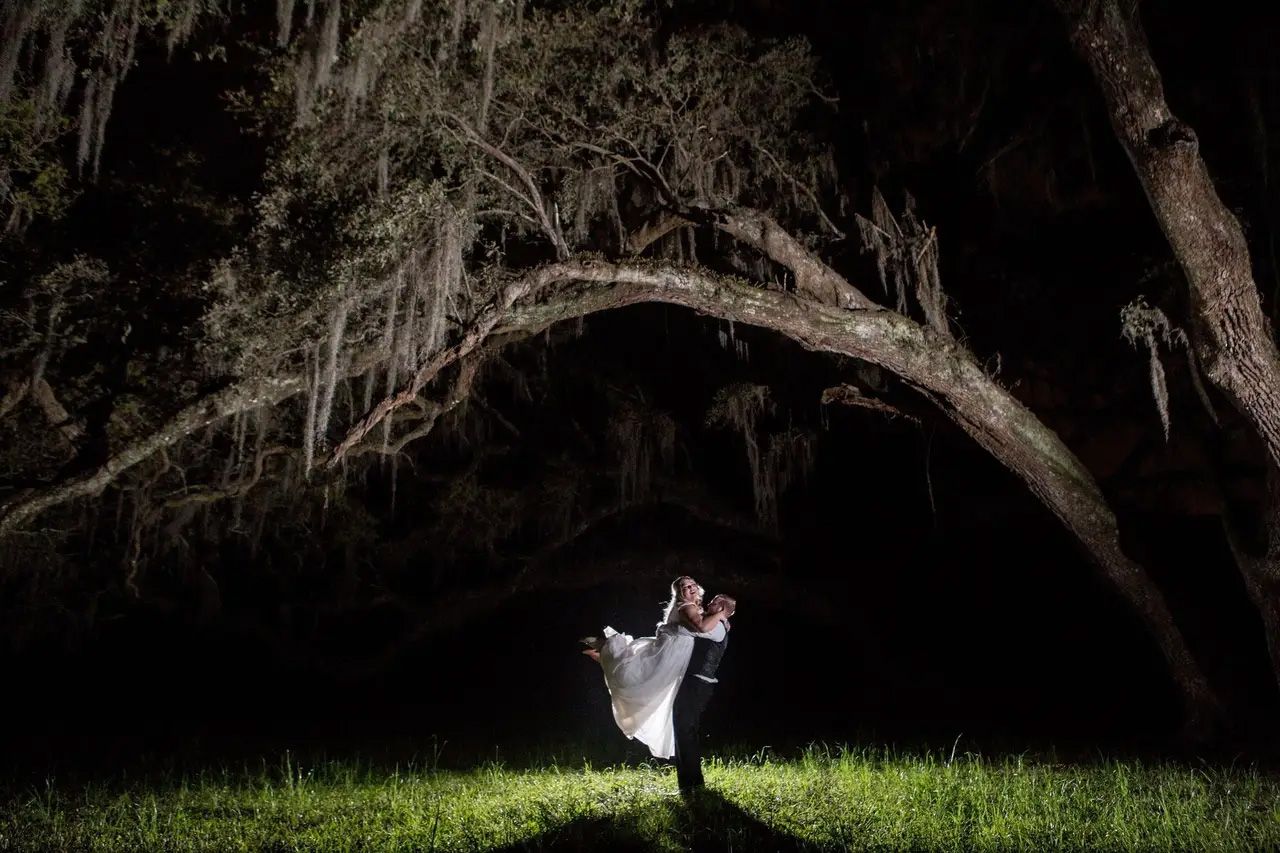
I've been photographing Charleston weddings long enough to have opinions. Not just "this venue is beautiful" opinions — anyone can look at Instagram and say that — but real working knowledge of how each place photographs across different times of day, different seasons, and different weather. I know which venues have a 20-minute golden hour window worth planning around and which ones hold up in flat light. I know which directions face east and which ceremony sites get backlit in the afternoon.
This guide is built from that vantage point. Every venue here is one I've worked at — not visited on a tour, but actually photographed at with a couple on their wedding day. That distinction matters when you're trying to make a real decision.
Choosing a Charleston wedding venue is one of the most consequential decisions you'll make — and it's often made from a website, a brief site tour, and a handful of styled editorial shoots that may or may not represent what your wedding actually looks like there. This guide takes a different angle. What follows are honest notes, written from hundreds of hours of working inside these spaces: what each venue does photographically, where the challenges are, and which type of couple each one actually serves.
1. Middleton Place
Established in 1741 on the banks of the Ashley River, Middleton Place is the most architecturally and historically layered of Charleston's plantation venues. The azalea hillside, terraced gardens, and reflecting butterfly lakes create scenic variety that very few venues anywhere can match. The live oaks along the approach are some of the most commanding trees in the South.
Photographer's note: The ceremony and reception spaces face in a direction that gives you genuinely good light in late afternoon, particularly along the waterfront lawn. The distance between ceremony site and the garden areas also means you have visual variety for portraits without traveling more than a few hundred feet. This is one of the few venues where I can shoot for six hours and still feel like there are unexplored angles.
Watch for: Middleton is a working historic property that also hosts day visitors, so ceremony timing and site
exclusivity matter — confirm your access window carefully. The moss and tree canopy mean certain spots go dark earlier than the open light nearby suggests.
Ideal for: Couples who want historic grandeur and genuine landscape variety. Larger weddings photograph particularly well here because the scale of the property absorbs a big guest count without crowding the scenery.
2. Boone Hall Plantation
Boone Hall's Avenue of Oaks is probably the most recognized wedding image in Charleston. Nine rows of live oaks draped in Spanish moss line the three-quarter-mile approach to the main house, and they have since 1743. The image earns its reputation — but knowing what to expect technically makes the difference between a great shot and a predictable one.
Photographer's note: The Avenue is a late afternoon shot. Midday sun from directly above kills the image — you get harsh shadows across the road and lose the textural detail in the moss. Around 4 to 5pm in spring and fall, the light comes through the canopy at an angle that transforms the whole space. I've gotten some of my most technically strong images along that approach, but timing is the variable that separates them from ordinary.
Watch for: Boone Hall has a large event footprint — multiple venue buildings, different lawn configurations — and guest count determines which spaces you'll access. The plantation also operates as a working farm and occasional film location, which can affect access on certain dates.
Ideal for: Couples who specifically want the iconic avenue setting. It delivers. Also good for large weddings that need multiple spaces for different events across the weekend.
3. Lowndes Grove
Lowndes Grove sits on the bank of the Ashley River, directly across from downtown Charleston, on a property that was part of the original Lowcountry plantation system. The antebellum main house, wide lawn facing the river, and enormous live oaks create a tented wedding experience that feels genuinely elevated — not the commercial tent-event feel you get at less considered properties.
Photographer's note: The water reflection in the river at golden hour is exceptional. The Lowndes Grove dock gives you a vantage point for portraits with the downtown Charleston skyline visible across the water — a composed, cinematic shot that no other venue on this list can offer. The tree canopy above the lawn also diffuses afternoon light in a way that makes mid-day portraits more workable than you'd expect.
Watch for: This is a tented venue, which means the aesthetic depends significantly on how your planner and rental team configure the space. The tent itself is neutral — the lighting and decoration choices determine the visual result.
Ideal for: Couples who want the Lowcountry waterfront experience on a property that feels organic and site-specific rather than resort-commercial.
4. Magnolia Plantation & Gardens
Magnolia Plantation is not a plantation wedding venue in the grand ballroom sense — it's a garden property, and a specifically atmospheric one. The grounds include some of the most overgrown, Spanish-moss-heavy gardens in the Southeast, with winding paths, a heron lake, and a small white garden chapel that photographs like nothing else in the Charleston area.
Photographer's note: Magnolia photographs beautifully on overcast days. Filtered cloud light removes the contrast that makes dense garden canopies muddy in full sun. I've shot there on gray autumn days and gotten some of my most tonally rich images. The chapel is small — intimate weddings only — but the image of the chapel exterior surrounded by garden and moss is one of the most photographically striking frames I've worked with in this market.
Watch for: Magnolia is primarily a daytime, garden-ceremony venue. Most couples who marry here do a garden ceremony and then move to a separate reception venue. Confirm the event structure early if this is your preference.
Ideal for: Couples who want an intimate, moody, garden ceremony. Also excellent for elopements and micro-weddings. If you've ever described your aesthetic as dark romantic or English garden, this is your venue.
5. The William Aiken House
The William Aiken House is a Greek Revival mansion in Charleston's Harleston Village, built in the 1820s and now operated as a premier event venue. The main house, walled carriage house, and garden courtyard create a self-contained event campus in a residential neighborhood — which feels quietly intimate in a way that the plantation venues don't.
Photographer's note: The wrought iron gates, brick garden walls, and grand staircase give you formal, architecture-driven portrait compositions that are specific to a downtown historic property. The courtyard garden is shaded enough to shoot in comfortably throughout the day, and the interior staircase is one of the strongest setups for formal portraits I've worked with in Charleston.
Watch for: The Aiken House books far in advance. Saturday dates in peak season fill quickly. The venue also sits in a residential neighborhood, so noise ordinances govern event end times.
Ideal for: Couples who want a formal, historic setting with a downtown Charleston address. Particularly well suited to intimate to medium-size weddings where the scale of the space feels proportionate rather than oversized.
6. The Cedar Room
The Cedar Room occupies a 19th-century warehouse in the NoMo district — Charleston's industrial waterfront before the neighborhood's ongoing redevelopment. It's a departure from the plantation-and-garden template that defines most of this list: a high-ceiling, exposed-beam, industrial-modern space with a distinctive visual language.
Photographer's note: The Cedar Room rewards couples who understand their aesthetic. If your vision is white on white with garden florals, the space works against you. If you're thinking moody editorial, candlelight, bold color, or maximalist design, the bones of this space are excellent. The ceiling height creates the kind of reception images that feel dimensional rather than flat. I've shot some of my most visually unusual Charleston wedding images here because the venue pushes against the romantic vernacular.
Watch for: This is an open-canvas venue that requires a design build. Couples who are less interested in investing in florals and lighting design won't get the same return from the space. The urban character may not align with every couple's vision.
Ideal for: Design-forward couples, and couples whose planner has strong relationships in the event design world. Also excellent for anyone who wants to look at their images and see something that doesn't look like every other Charleston wedding they've seen.
7. Cannon Green
Cannon Green is in the Upper King Street neighborhood — an outdoor garden venue with a high white tent, brick courtyard, and surrounding greenery that creates a refined garden-party atmosphere in a compact urban setting. It occupies the footprint of what was originally a private estate garden.
Photographer's note: The enclosed garden feels very different from the open plantation sites — it's intimate and contained, which means light, decoration, and guest count define the image more directly. Late afternoon light comes over the surrounding buildings at a low angle that illuminates the courtyard well. The brick wall backdrop and garden plantings give you genuine texture for portraits that don't feel generic.
Watch for: Cannon Green has a specific capacity and footprint. For larger weddings, the space can feel compressed — it works well for guest counts that fit the intimate scale of the property. If you're inviting 200 people, this is probably not your venue.
Ideal for: Intimate to medium weddings. Couples who want a Lowcountry-garden feel without leaving downtown. Also well suited to cocktail-forward events rather than traditional seated receptions.
8. The Gadsden House
The Gadsden House is one of Charleston's oldest surviving private residences, built in the 1740s on East Bay Street, and now operates as an intimate boutique event venue. The walled garden and piazza create an almost secret-garden quality — one of the most specifically "Charleston" settings on this list.
Photographer's note: This is a venue where scale works in your favor. For intimate weddings — 30 to 60 guests — the Gadsden House creates a closeness between the couple and their people that larger venues can't manufacture. The wrought iron work, the old brick, the garden walls: this is the most architecturally detailed of the downtown venues I've worked at, and portrait opportunities here are specific and excellent.
Watch for: The venue is genuinely intimate — it does not accommodate large weddings. East Bay Street location also means street noise is part of the environment. It's a historic downtown property with all the character that implies.
Ideal for: Small, intentional weddings. Couples who value the feeling of being somewhere specific over the scale of the event.
9. Legare Waring House
Legare Waring House is operated by Charleston County Parks and sits on Charles Towne Landing State Historic Site — a 664-acre property on the west bank of the Ashley River that marks the site of the first English settlement in the Carolinas. The venue is a Lowcountry house surrounded by some of the largest and oldest live oak specimens in the area.
Photographer's note: The live oaks here are exceptional — and I use that word carefully on a list that includes Boone Hall and Middleton Place. The specific combination of canopy spread, draped moss, and afternoon light filtering through creates ceremony images that are distinctly different from every other venue I've worked at in this region. The setting is also more open than many oak-heavy venues, which means better portrait light in the mid-afternoon than you might expect from such dense canopy.
Watch for: Legare Waring is a county-operated venue, which affects some aspects of the event experience versus privately operated properties. Parking, logistics, and catering require coordination through the county venue system — worth understanding early so you plan your vendor team accordingly.
Ideal for: Couples who prioritize the landscape over the architecture. Also excellent for couples who want a less commercially busy setting than some of the more prominent plantation names.
10. Kiawah Island Golf Resort
Kiawah Island is 21 miles south of Charleston on a barrier island with ten miles of beach, the Ocean Course, and resort infrastructure that makes a full destination wedding weekend genuinely easy to execute. This is the only venue on this list where your guests can walk from their room to the ocean.
Photographer's note: Beach and ocean light behaves differently from every other setting on this list, and Kiawah delivers something no plantation or downtown property can: water horizon, Atlantic evening light, and the specific quality of beach portraits in the golden hour. The Ocean Room also photographs extremely well — high ceiling, neutral palette, and large windows that allow natural light during cocktail hour. I've gotten some of my most layered end-of-night reception images in that room.
Watch for: Kiawah operates as a resort, which means the wedding experience runs through a full-service events team. This is a feature, not a constraint — the logistics are handled at a level that relieves enormous planning pressure. For couples who want maximum creative control over every vendor, confirm flexibility early.
Ideal for: Couples who want a full destination wedding weekend experience. Families coming from out of town who will appreciate a self-contained resort. Couples who specifically want a coastal ceremony or reception.
The Bottom Line
Ten venues. Ten different types of photographs, different guest experiences, different logistics realities. No single one is right for every couple — and the honest truth is that the venue is the frame, not the picture. What happens inside it, who's there, and how it's photographed is what makes an album something you'll actually want to return to.
If you're narrowing your venue list and want to talk through what any of these spaces looks like from a photography standpoint — light windows, portrait locations, what I'd plan differently at each — that conversation is what the contact form is for.